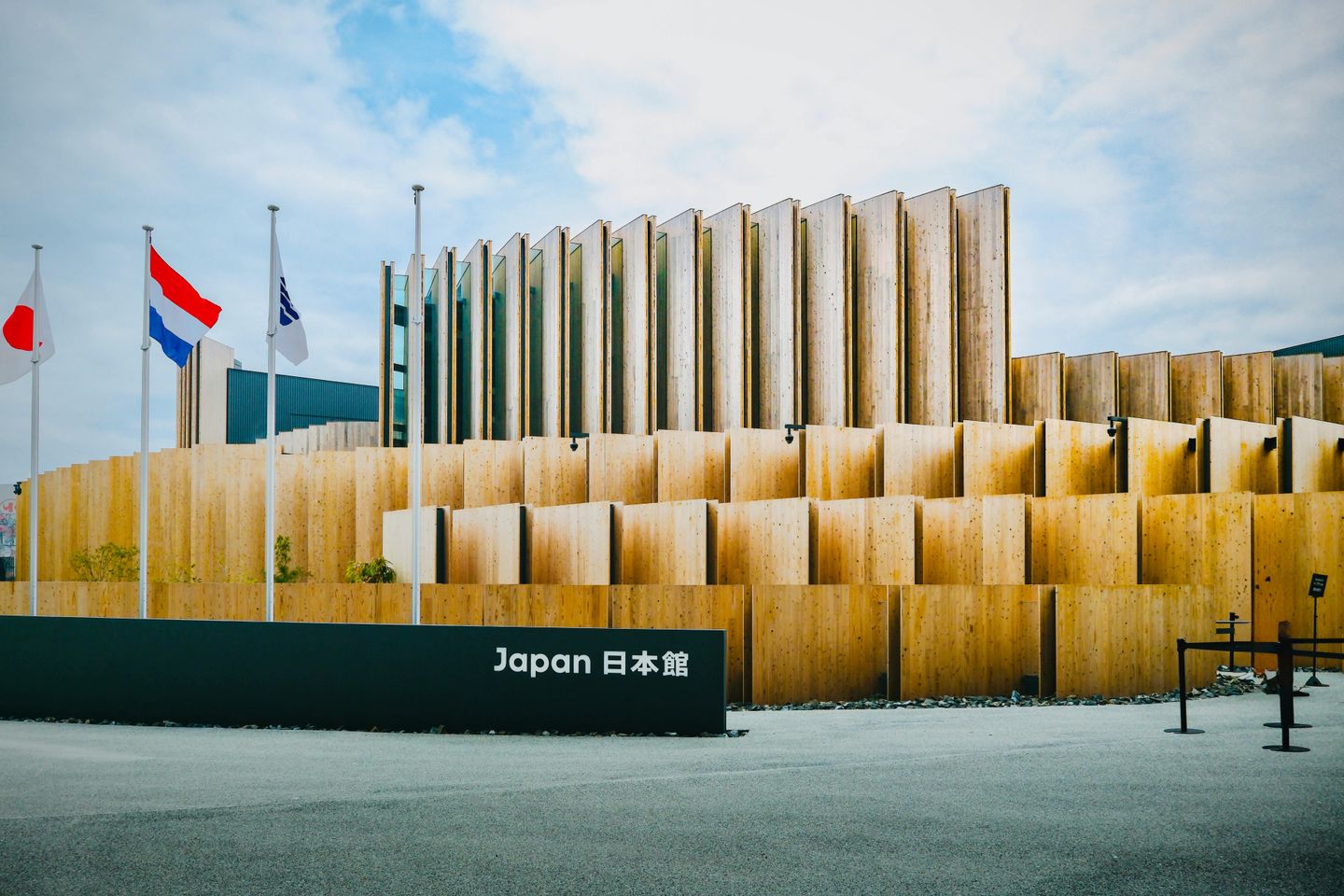
Japan Park architecture
Japanese Articles

Reason and cause: How to say “because” in Japanese?

By: Masaru Mito Thu Jun 11 2026
Japanese
Conjunctions, Particles

In Japanese, you’ll most often hear “because” translated using either から[kara] or ので[node]. Like “because,” these words can mark a reason or the cause of a situation, but unlike “because” they follow the phrase that they mark. Also, in Japanese, the reason or cause always comes before the result!

  • reason

    スポーツは楽しいから、好きです。

    Supōtsu wa tanoshii kara, suki desu.

    Because sports are fun, I like them.

  • cause

    毎日勉強したので、テストはよかったです。

    Mainichi benkyō shita node, tesuto wa yokatta desu.

    Because I studied every day, I did well on the test.

In this post, we’ll introduce you to から[kara] and ので[node], and go over how and when to use each one. We’ll also introduce you to a few alternative expressions like だから[dakara] and それで[sorede] which can also be used to discuss causes and reasons. Ready to have a look? Let’s dive right in!

How to use から [kara] for “because”?

When it means “because,” から[kara] is placed after the reason or cause in the plain form or polite form.

Reason / Cause
plain / polite

から

kara

Result

When should you use plain or polite? It depends on the overall politeness of the sentence. There are three possibilities:

Overall
politeness
Reason
Result
Example
Casual

plain

plain

plain

スポーツは楽しいから、好き

Supōtsu wa tanoshii kara, suki da.

Because sports are fun, I like them.

Polite

plain

polite

plainpolite

スポーツは楽しい から、好きです

Supōtsu wa tanoshii kara, suki desu.

Because sports are fun, I like them.

Very polite

polite

polite

polite

スポーツは楽しいですから、好きです

Supōtsu wa tanoshii desu kara, suki desu.

Because sports are fun, I like them.

Tip

In everyday conversation, you can sometimes take the “result” from context, for example:

Speaker A:

食べないんですか?

Tabenai n desu ka?

Aren't you going to eat (the salad)?

Speaker B:

ええ、野菜は嫌いだから…。

Ē, yasai wa kirai da kara

No, I don't like vegetables so…

Sometimes the “result” comes from the speaker’s own previous sentence. For example:

明日は来ません。仕事がありますから

Ashita wa kimasen. Shigoto ga arimasu kara.

I won't come tomorrow. (That’s) because I have work.

Remember, though, that when the reason and result are in the same sentence, the reason always comes first.

明日は来ません、仕事がありますから

Ashita wa kimase, shigoto ga arimasu kara

When to use から [kara] for a reason or cause

You can use から[kara] in the following situations:

  • To mark the reason for or cause of an action or situation.

    今週は仕事がたくさんあるから、忙しいです。

    Konshū wa shigoto ga takusan aru kara, isogashii desu.

    Because I have a lot of work this week, I’m busy.

    In this use, the reason will usually be in the plain form.

  • The reason the speaker is making a judgement or decision.

    日曜日だから、デパートは混んでいると思います。

    Nichiyōbi da kara, depāto wa konde iru to omoimasu.

    Given it’s Sunday, I think the department store is crowded.

    This explains why the speaker thinks the department store is crowded.
  • What the speaker thinks might be a reason for the listener to accept the request or invitation. You can think of this as the “necessary background information” for the request.

    • すぐ返すから、パソコン貸してくれない?

      Sugu kaesu kara, pasokon kashite kurenai?

      (Since) I'll return (it) right away, can you lend me your computer?

    • 僕が運転するから、一緒に旅行に行こう。

      Boku ga unten suru kara, issho ni ryokō ni ikō.

      (Since) I'll be driving, let’s go on a trip together.

How to use ので [node] for “because”

You can also use ので[node] as a more formal way to mark a reason or cause, like you might use “because.” To do this, simply place ので[node] after the plain form, or occasionally the polite form, of the reason. Make sure to put the result after the reason!

Reason / Cause
plain / (polite)

ので

node

Result

When should you use the polite form? Use the polite form only when the result is polite and only in very formal situations. Usually the reason will be in the plain form.

plain formpolite form
Casual:

毎日勉強したので、テストはよかったです

Mainichi benkyō shita node, tesuto wa yokatta desu.

Since I studied every day, I did well on the test.

Polite:

スマートフォンは便利ので買いました

Sumātofon wa benri na node, kaimashita.

Since smartphones are convenient, I bought (one).

Tip

When using ので[node], the result can also sometimes be taken from context.

Speaker A:

明日のパーティ、行くんですか。

Ashita no pātii, ikun desu ka?

Are you going to the party tomorrow?

Speaker B:

すみません、体調が悪いので…。

Sumimasen, taichō ga warui node...

I’m sorry. I’m not feeling well, so…

When to use ので [node] for a reason or cause?

You’ll use ので[node] for a reason or cause in many of the same situations where you’ll use から[kara], but ので[node] generally sounds a little more formal and softer.

  • The reason or cause of an action or situation:

    このかばんは高いので、買いません。

    Kono kaban wa takai node, kaimasen.

    Since this bag is expensive, I won't buy it.

  • The reason the speaker is making a judgment or decision:

    今日は雨なので、傘を持って行った方がいいです。

    Kyō wa ame na node, kasa o motte itta hō ga ii desu.

    Since it's raining today, it’s better to bring an umbrella.

  • What the speaker thinks might be a reason that the listener will accept a request or invitation (the “background information”):

    この店の餃子はすごくおいしいので、食べてみて下さい。

    Kono mise no gyōza wa sugoku oishii node, tabete mite kudasai.

    Since the dumplings at this restaurant are very delicious, please try eating them.

から [kara] vs. ので [node]: Are there cases where you can use one but not the other?

We saw above that, apart from their formality, から[kara] and and ので[node] are very similar in meaning and usage. However, there are some cases where you can use から[kara] but not ので[node]. Let’s look at a couple of these cases:

  • The reason is the complete sentence: “It’s because…”

    If you want to form a complete sentence that does not include a result, you’ll need to use から[kara], not ので[node]. You’ll often do this as a way to answer “why” questions, asked with どうして[dōshite] or the more formal なぜ[naze].

    Question:

    どうして日本語を勉強しているんですか。

    Dōshite nihongo o benkyō shite iru n desu ka?

    Why are you studying Japanese?

    Answer:

    日本で働きたいからです

    Nihon de hatarakitai kara desu.

    It’s because I want to work in Japan.

    Sentences like this use the same structure as a state-of-being sentence, ending with [da] or です[desu]. Note, though, that から[kara] can only be attached to the plain form in this structure.

    Reason
    plain form

    から

    kara

    だ / です

    da / desu

    Tip

    Remember that, as we above, you don’t always need to use a complete sentence to do this in casual conversation! In an informal context, where you’re okay with using an incomplete sentence, you can use either から or ので.

  • When emphasizing the reason: “The reason… is that…”

    When you want to emphasize the reason why something is happening, you’ll use the sentence structure below.

    Result
    plain form

    の / 理由

    no / riyū

    wa

    Reason
    plain form

    から

    kara

    だ / です

    da / desu

    resultreason

    この店が人気がある理由は安くておいしいからです

    Kono mise ga ninki ga aru riyū wa, yasukute oishii kara desu.

    The reason why this restaurant is popular is because it’s cheap and delicious.

    This structure makes the result into the topic of the sentence, which you can tell because it’s marked by the topic marker [wa]. This means that the result is considered “old news,” something we’ve already mentioned or discussed.

    Because the result is “old news,” you can use this structure when the reason is new and interesting information, by contrast.

    Notice, though, that in this construction you can use から[kara] to mark the reason, but not ので[node]!

    What are の [no] and 理由 [riyu] in the formula above?

    In the structure above, you can choose to use either [no] or 理由[riyū], but the meaning will be a little bit different.

    • 理由[riyū] means “reason.” When you use this, the literal meaning is something like: “The reason he’s tired is that he didn’t sleep last night.”

    • [no] is a nominalizer, meaning it turns the reason into a . When you use this, the literal meaning is something like: “His being tired is because he didn’t sleep last night.”

  • When the reason contains だろう [darō]

    The ending だろう[darō] can be added to a phrase to indicate that the speaker is speculating or making a theory. If this comes at the end of the reason or cause, you can only follow it with から[kara], not ので[node].

    今日は寒いだろうから、コートを持って行った方がいいですよ。

    Kyō wa samui darō kara, kōto o motte itta hō ga ii desu yo.

    Since it’s probably cold today, it’s better to take a coat with you.

  • When the “result” is an invitation, command, or decision in the plain form

    Only から[kara] can mark the reason if the “result” part of the sentence is in the plain form and contains an invitation, command, or a statement about the speaker’s own decisions.

    • command

      この資料は明日までだから急いで

      Kono shiryō wa ashita made da kara, isoide.

      This document is due tomorrow, so hurry up.

    • invitation

      あのお店はおいしいから、今度一緒に行かない

      Ano omise wa oishii kara, kondo issho ni ikanai?

      That restaurant is delicious, so why don't we go together next time?

    Exception!

    ので[node] can be used when the “result” is in the polite form!

    • polite command

      この資料の締切は明日なので急いでください

      Kono shiryō no shimekiri wa ashita na node, isoide kudasai.

      The deadline for this document is tomorrow, so please hurry up.

    • polite invitation

      あのお店はおいしいので、今度一緒に行きませんか

      Ano omise wa oishii node, kondo issho ni ikimasen ka.

      That restaurant is delicious, so why don't we go together next time?

What are some other ways to mark a reason or cause?

Though から[kara] and ので[node] are the most basic ways to mark a reason or cause in Japanese, there are a few other phrases you can use this way too. To combine S1 and S2 into one sentence, we can also employ conjunctions used to express the cause-effect relationship between separate S1 and S2 sentences. In this section, we will cover two major words, だから[dakara] and それで[sorede].

The differences between から/ので[kara / node] and だから/それで[dakara / sorede] are as follows:

  • だから/それで[dakara / sorede] are always used at the beginning of S2.

  • Unlike から/ので[kara / node] , だから/それで[dakara / sorede] cannot be used to provide necessary background information for S2.

  • だから/それで[dakara / sorede] can be used in both written and spoken languages, but in daily conversations, the sentence patterns of “S1 から/ので[kara / node] , S2” are more commonly used.

Let’s take a look at how to use them.

〜し [shi]: When there’s more than one reason

When you want to list multiple reasons or causes,, you’ll want to use the ending 〜し[shi] after each of them.

頭が痛い、熱もある、今日は学校を休もうと思います。

Atama ga itai shi, netsu mo aru shi, kyō wa gakkō o yasumō to omoimasu.

Because I have a headache and I have a fever, I’m thinking of taking a day off from school today.

Often the final 〜し[shi] is replaced by から[kara] or ので[node]. Doing this doesn’t change the meaning.

頭が痛い、熱もあるから、今日は学校を休もうと思います。

Atama ga itai shi, netsu mo aru kara, kyō wa gakkō o yasumō to omoimasu.

Because I have a headache and I have a fever, I’m thinking of taking a day off from school today.

You can use 〜し[shi] when giving only one reason, but this implies that there are probably other reasons as well. Compare:

  • 天気がいい、出かけよう。

    Tenki ga ii shi, dekakeyō.

    Since the weather is nice and all, let’s go out.

    Implies that there are probably other reasons to go out that the listeners are already aware of.
  • 天気がいいから、出かけよう。

    Tenki ga ii kara, dekakeyō.

    Since the weather is nice, let's go out.

    This sounds like the nice weather is the only reason to go out.

For more on this ending, check out our post on 〜し!

だから [dakara] or それで [sore de]: To start a new sentence

If the reason and the result are in separate sentences, you can use だから[dakara] or それで[sore de], where you might use a phrase like “because of that…” or “that’s why…” in English. Use the sentence that begins with the marker directly after the sentence that gives the reason.

  • 最近仕事が忙しいです。だから、遊ぶ時間がありません。

    Saikin shigoto ga isogashii desu. Dakara, asobu jikan ga arimasen.

    Recently, I’ve been busy with work. Because of that, I don’t have time to hang out.

  • A社の車はよくなかったです。それで、今回はB社の車を買いました。

    A-sha no kuruma wa yokunakatta desu. Sore de, konkai wa B-sha no kuruma o kaimashita.

    The car from Company A wasn’t good. That’s why, this time I bought a car from Company B.

Let’s look at some of the cases where you can use these, and what might lead you to choose one over the other.

  • When the result is factual

    When the result is factual — something happened or will happen — you can use either だから[dakara] or それで[sore de].

    If the cause-and-effect is indirect, それで[sore de] tends to sound more natural.

    最近ガソリンが高くなっています。それで、バスや自転車を使う人が増えました。

    Saikin gasorin ga takaku natte imasu. Sore de, basu ya jitensha o tsukau hito ga fuemashita.

    Recently, gasoline prices have been increasing. Because of that, the number of people using buses or bicycles has increased.

  • When the “result” is an invitation, command, opinion, etc.

    If the result is not a statement of fact, but is instead something like an invitation, command, or opinion, you should always use だから[dakara].

    プラスチックのゴミが多くなっています。だから、リサイクルした方がいいです。

    Purasuchikku no gomi ga ōku natte imasu. Dakara, risaikuru shita hō ga ii desu.

    There is a lot of plastic waste. That’s why it is better to recycle.

    We don’t use それで[sore de] if the result is not a factual statement.

  • To express agreement or understanding of a cause-and-effect relationship

    In everyday conversation, you can use either だから[dakara] or それで[sore de] to express that you agree with or understand why some cause would lead to a particular effect.

    Employee 1:

    山田さんは今日会社に来ていないんですね。

    Yamada-san wa kyō kaisha ni kite inai n desu ne.

    Mr. Yamada is not at the office today, huh?

    Employee 2:

    ええ、出張だって昨日言ってましたよ。

    Ee, shucchō datte kinō ittemashita yo.

    Yes, he said yesterday that he would go on a business trip.

    Employee 1:

    ああ。だから、来ていないんですね。

    Ā. Dakara, kite inai n desu ne.

    I see. That's why he’s not here.

    Father:

    あれ?車が濡れてる。

    Are, kuruma ga nurete ru.

    Huh? My car is wet.

    Child:

    ああ、さっきまで雨が降ってたよ。

    Ā, sakki made ame ga futte ta yo.

    Yeah, it was raining until a little while ago.

    Father:

    ああ。それで、濡れてるんだ。

    Ā. Sore de, nurete ru n da.

    Ah, I see. That's why it's wet.

  • To prompt someone else to explain the outcome

    In casual conversation, you can use だから[dakara] or それで[sore de] to ask for more information, but the sense of each word is quite different.

    Using だから[dakara] to ask for information sounds confrontational, like you’re frustrated that someone hasn’t already provided the information. You wouldn’t use this with a superior!

    Speaker A:

    ごめん、宿題がたくさんあって…。

    Gomen, shukudai ga takusan atte…

    Sorry, I had a lot of homework...

    Speaker B:

    だから

    Dakara?

    So?

    Speaker A:

    だから、パーティに行けなかったんだ。ごめん!

    Dakara, pāti ni ikenakatta n da. Gomen!

    So I couldn't come to the party. I’m sorry!

    Using それで[sore de] to ask for more information sounds eager, like you are curious to know what happened next. Notice that, in this use, それ[sore] can sometimes be dropped.

    Speaker A:

    昨日買い物に行ったんだけど、財布を家に忘れて…。

    Kinō kaimono ni itta n da kedo, saifu o ie ni wasurete…

    I went shopping yesterday, but I forgot my wallet at home...

    Speaker B:

    えー!(それ) で

    Ē! (Sore) de?

    Oh no! And then?

    Speaker A:

    (それ) で、家まで帰らなきゃいけなかったんだよ。

    (Sore) de, ie made kaeranakya ikenakatta n da yo.

    And then, I had to go back home.

  • To show frustration

    In casual conversation, you can use だから[dakara] to express that you’re frustrated that someone else doesn’t understand your reasoning. This use is also something you shouldn’t use with a superior, as it can be considered rude!

    Speaker A:

    遅くなって、ごめん。道が混んでて…。

    Osokunatte, gomen. Michi ga konde te…

    Sorry for being late. The road was busy...

    Speaker B:

    1時間も待ったんだよ。信じられない。

    Ichi-jikan mo matta n da yo. Shinjirarenai.

    I waited for an hour. I cannot believe it.

    Speaker A:

    だから、道が混んでたんだよ!

    Dakara, michi ga kondeta n da yo!

    I told you , the road was busy!

ために [tame ni]: A more formal alternative

In the most basic cases, where you’re describing the cause or reason for an action or situation you can use phrases with ため[tame] or ために[tame ni]. This expression is more formal than using から[kara] or ので[node].

風が強いため(に)、花火は中止になりました。

Kaze ga tsuyoi tame (ni), hanabi wa chūshi ni narimashita.

Due to strong winds, the fireworks were canceled.

You can also use a version of this expression, そのために[sono tame ni], at the start of a sentence, where you might otherwise use だから[dakara]. The [ni] remains optional and the phrase still feels formal.

最近仕事が忙しいです。そのため(に)、遊ぶ時間がありません。

Saikin shigoto ga isogashii desu. Sono tame (ni), asobu jikan ga arimasen.

Recently, work has been busy. Because of that, I don't have time to hang out.

Important

The expression ために[tame ni] is more commonly used to mark the purpose or goal of an action, like you might use “in order to” in English. Check out our post on purpose in Japanese to learn about the other uses of ために[tame ni]!

To sum up

We have covered how to express reasons using から[kara] and ので[node], and also discussed alternative expressions such as だから[dakara] and それで[sore de]. Here is a quick summary:

  • In Japanese, you’ll most often use から[kara] or ので[node] to mark a reason or a cause.

    This means that a phrase that would start with “because” or “since” in English will usually end with から[kara] or ので[node].
  • から[kara] or ので[node] will most often follow the plain form. They can follow the polite form, but only in formal situations where the polite form is also used in the result.

  • ので[node] is softer and more formal than から[kara], but there are some cases where you cannot use ので[node].

  • There are a few other words and phrases that can also be used to mark a cause-and-effect relationship:

    • 〜し[shi] → used to list multiple reasons for a situation

    • だから[dakara] → when the reason and result are in separate sentences

    • それで[sore de] → when the reason and result are in separate sentences (only when the result is factual!)

    • ために[tame ni] → a more formal alternative in restricted situations

Ready to practice? Check out our Japanese reason and cause activities to test your skills! Happy learning!

To embark on your next language adventure, join Mango on social!

Ready to take the next step?

The Mango Languages learning platform is designed to get you speaking like a local quickly and easily.

Mango app open on multiple devices