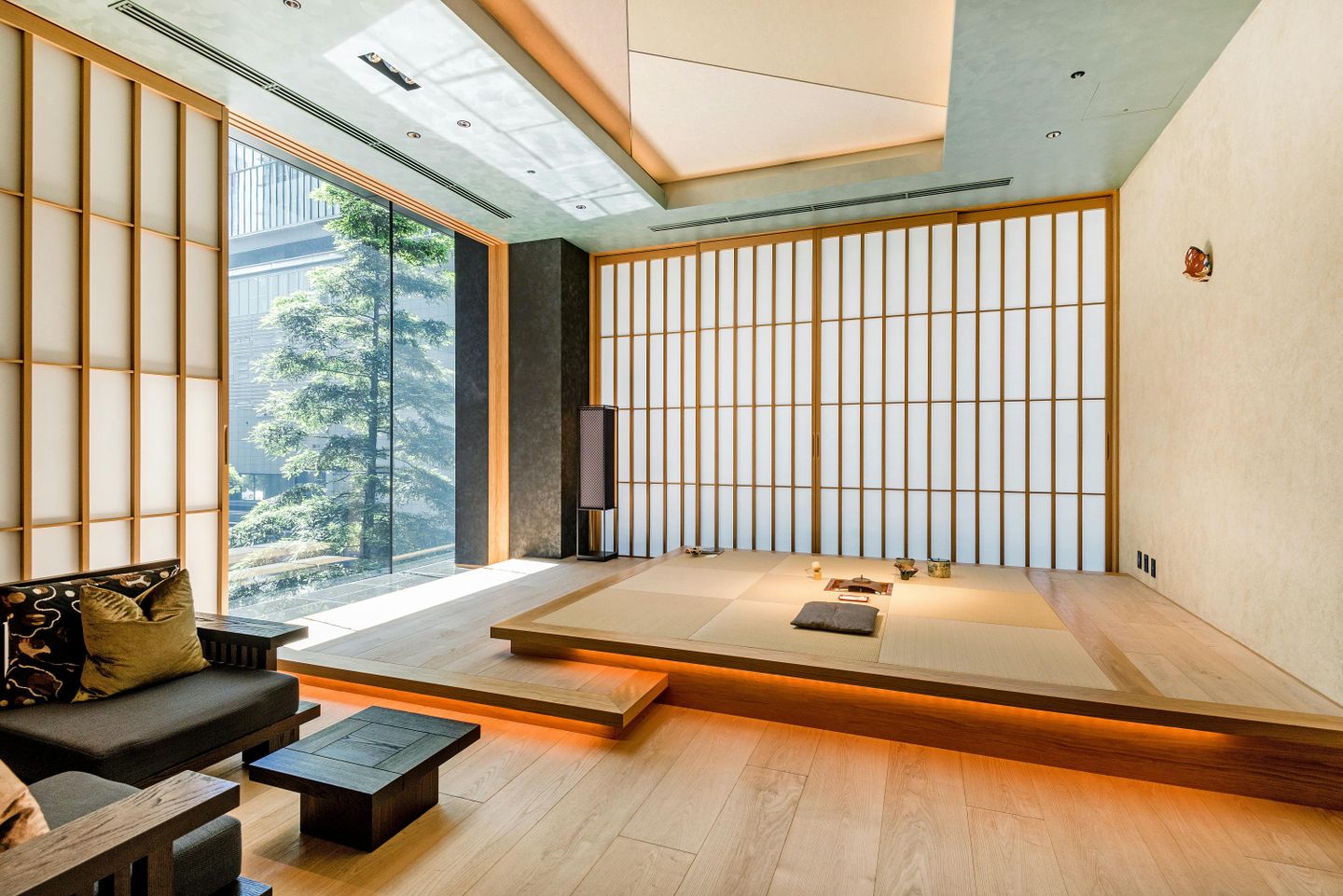
A Japanese living room
Japanese Articles

How to form a description in Japanese using both は (wa) and が (ga)?

By: Kumiko Saeto Tue Jun 09 2026
Japanese
Particles, Sentence Structure

In Japanese, we often use [wa] and [ga] together to provide descriptive information about people, animals, and things. We do this using the sentence pattern below:

Described

wa

ga

コーギーいです

Kōgī wa ashi ga mijikai desu.

Corgis have short legs.

lit. (as for) Corgis, (their) legs are short.

There are a lot of situations when you can use this structure: to introduce yourself, to describe a person or animal, to talk about places you’ve visited, and more. Though it can take some practice to perfectly understand when to use [wa] and [ga] in general, mastering this simple equation will help you get started. Let’s have a closer look!

Review: What do は (wa) and が (ga) mean?

In Japanese, [wa] and [ga] are particles that mark features of the noun that comes directly before them.

  • The particle [wa] follows the topic → Usually, this is one individual chosen from a group already under discussion.

  • The particle [ga] follows the subject of the sentence → This is the noun that directly interacts with the verb, usually the noun that does the action.

Let’s see how that applies in a [wa] + が (ga) description:

Main Noun

wa

Feature Noun

ga

Description

  • [wa] follows the noun you’re really talking about.

    the topic of the conversation overall
  • [ga]follows some property of the main noun, and the adjective directly describes this property noun

    the subject of this particular sentence

Think of this like how you use your camera when you take pictures.

  • First, you aim the camera at the person or object you want to capture, right? This is the “main noun”: the topic.

  • Then you focus the camera on the specific part or aspect of them because you are interested in it, like the face. This is the “feature noun”: the subject. This is the noun the adjective directly describes.

When to use は (wa) + が (ga) to make a description?

Let’s look at some situations where you will often use [wa] + [ga] descriptions in Japanese.

Describing physical attributes

We often use [wa] + [ga] descriptions to describe the physical attributes or features of people, animals, and places. Let’s look at some examples!

With people and animals, this can be a great way to comment on particular parts of the body.

  • コーギー短いです。

    Kōgī wa ashi ga mijikai desu.

    Corgis have short legs.

    lit. (as for) Corgis, (their) legs are short.

  • いいです。

    Otōto wa atama ga ii desu.

    My brother is smart.

    lit. (as for) My brother, (his) head is good.

  • 高いです。

    Watashi wa se ga takai desu.

    I’m tall.

    lit. (as for) Me, (my) height is high.

With places, this is a good way to talk about local points of interest.

  • 日本温泉多い。

    Nihon wa onsen ga ōi.

    Japan has a lot of hot springs.

    lit. (as for) Japan, (its) hot springs are many.

  • 広島かきおいしい。

    Hiroshima wa kaki ga oishii.

    Hiroshima’s oysters are tasty.

    lit. (as for) Hiroshima, (its) oysters are tasty.

Important

When speaking about characteristics of people, animals, and places, you can almost always replace the particle pair [wa] + [ga] with the particle pair [no] + [wa] with very little change in meaning:

高いです = 私高いです

Watashi wa se ga takai desu = Watashi no se wa takai desu

I am tall.

Check out our post on the particle [no] to learn more about why this works!
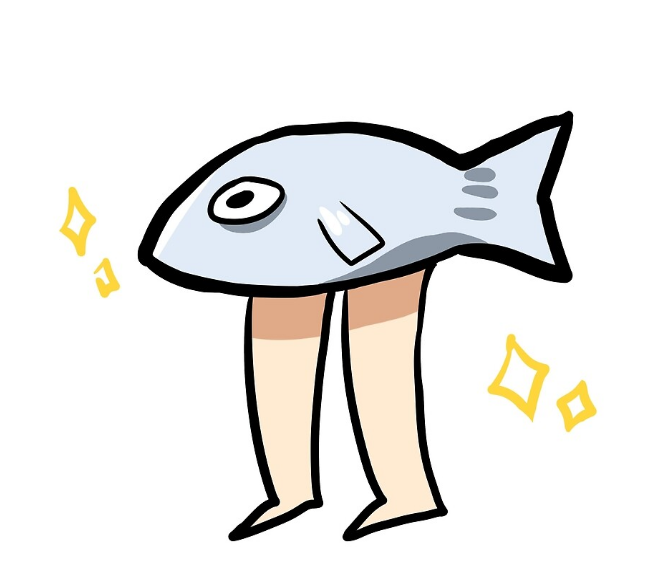
Fun fact!

Do fish have legs? Maybe they do in the Japanese language! はやい[sakana wa ashi ga hayai] is a Japanese idiomatic phrase that literally means: “Fish, (their) legs are fast.”

Though it sounds like fish have legs, this phrase means that fish go bad fast. It’s the same description we give to someone who runs fast.

Not too long ago, perishable food was transported unrefrigerated from oceans and farms to stores. Fish and fast runners were essential for sushi.

a cartoon of a fish with legs

Describing skills and abilities

You can also use [wa] + [ga] descriptions to describe skills and abilities using the pattern below:

Person

wa

Skill

ga

Skill level

キムさん運転上手です

Kim san wa unten ga jyōzu desu.

Kim is good at driving.

lit. (as for) Kim, (her) driving is good.

ケイト泳ぐの下手です

Keito wa oyoguno ga heta desu.

Kate is not a good swimmer.

lit. (as for) Kate, (her) swimming is not good.

Likes and dislikes

Another way to use [wa] + [ga] is to express your or others’ likes and dislikes! Follow this pattern:

Person

wa

Noun

ga

Person's feelings about the noun

好きです

Watashi wa inu ga suki desu.

I like dogs.

lit. (to) me, dogs are preferable.

本を読むの嫌いです

Otōto wa hon o yomuno ga kirai desu.

My brother hates reading books.

lit. (Regarding) my brother, reading books is dispreferred.

When to use a verb after が (ga)?

You can sometimes use a verb after [ga] in a [wa] + [ga] description, rather than an adjective. You’ll often see this in sentences expressing…

  • Something you want to do or can do:

    Person

    wa

    Object of a verb

    ga

    Verb

    飲みたい

    Watashi wa mizu ga nomitai.

    I want to drink water.

    日本語話せます

    Watashi wa nihongo ga hanasemasu.

    I can speak Japanese.

    Check out our post on expressing desire and on potential verbs to learn the verb forms you’ll need for these expressions!

    Tip

    In this case, can be replaced by [o], the object marker.

  • To say something exists using たくさんいます[ takusan imasu](a lot exist):

    ブラジルにイルカ沢山います。

    Burajiru ni wa iruka ga takusan imasu.

    There are a lot of dolphins in Brazil.

    lit. (Regarding) Brazil, dolphins a lot exist.

  • When the topic is the object of a verb:

    ケーキお父さんがべました。

    Kēki wa otōsan ga tabemashita.

    My dad ate the cake.

    lit. (Regarding) the cake, my father ate (it).

    This places more emphasis on お父さん than the default way to express the sentence: お父さんはケーキを食べました [otōsan wa kēki o tabemashita](My father ate the cake.)

To sum up

Here’s what we covered in this post!

  • A basic description using [wa] + [ga] has this structure:

    Topic of description

    wa

    Feature of topic

    ga

    Description of feature

  • The pattern can be used for speaking about:

    • physical characteristics

    • skills and abilities

    • likes and dislikes

  • There are a few cases where you might use a verb after [ga] instead of an adjective.

Remember that, and you’ll spot this pattern everywhere! Enjoy the fun [wa] + [ga] description exercises we prepared for you!

To embark on your next language adventure, join Mango on social!

Ready to take the next step?

The Mango Languages learning platform is designed to get you speaking like a local quickly and easily.

Mango app open on multiple devices