Below you will find the forms of the English possessive adjectives and some examples of how to use them.
| Illustration | Personal pronoun | Possessive adjective | Description | Description |
|---|---|---|---|---|
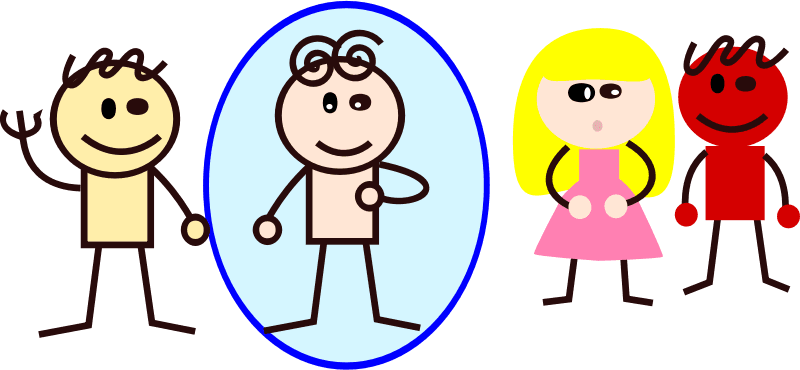 | I | my | belongs to the speaker | my hair (the hair that belongs to me) |
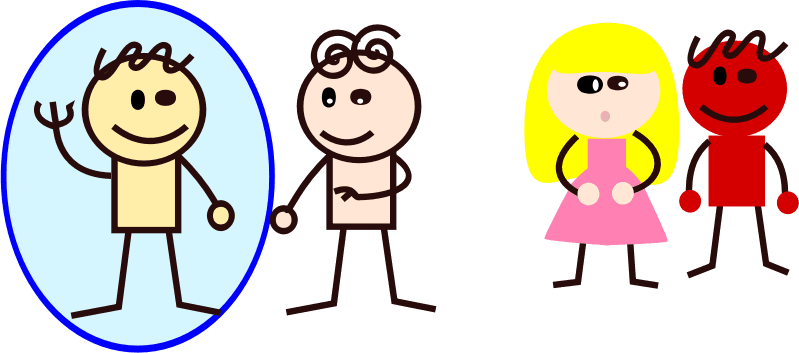 | you | your* | belongs to the person or people you are talking to | your hair (the hair that belongs to you) |
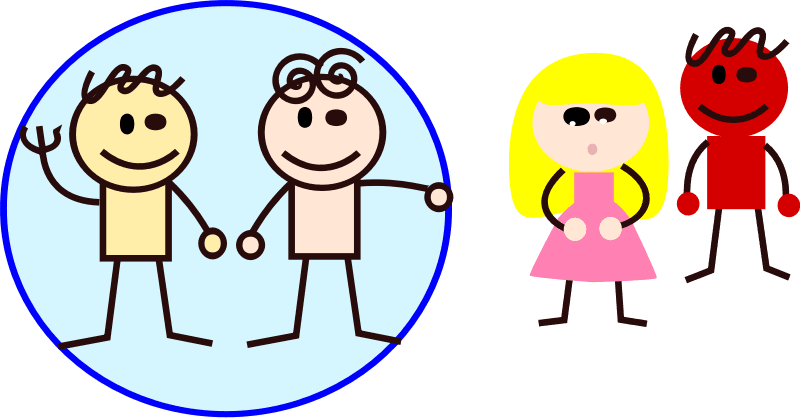 | we | our | belongs to the speaker’s group | our hair (the hair that belongs to us) |
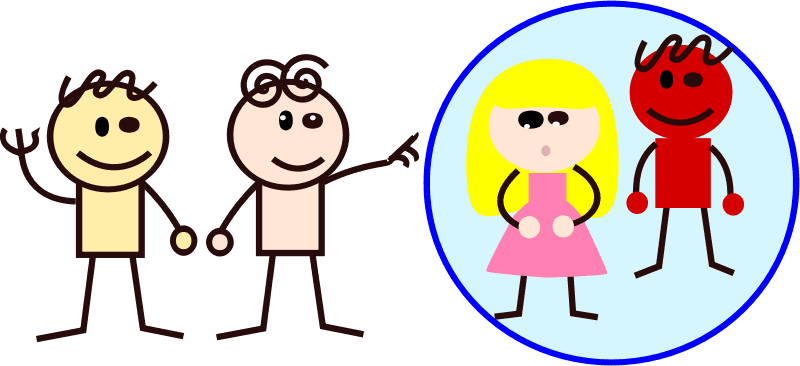 | they | their | belongs to more than one person not in the conversation | their hair (the hair that belongs to them) |
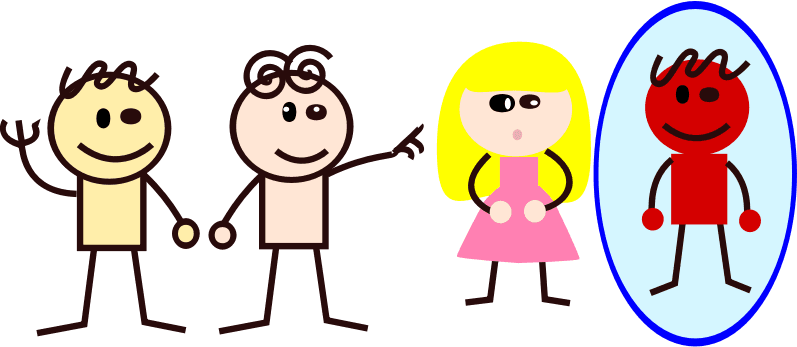 | he | his | belongs to a male person or animal who is not in the conversation | his hair (the hair that belongs to him) |
she | her | belongs to a female person or animal who is not in the conversation | her hair (the hair that belongs to her) | |
it | its | belongs to a non-human | its hair (the hair that belongs to it) | |
they | their | belongs to a single person of unknown / non-specific gender | their hair (the hair belongs to them) | |
who | whose | belongs to an unknown person or introduces a clause that describes the owner of an object | Whose hair? a person whose hair is long |
*In dialects that have a special form for the plural you (for more than one person), you can use the following like possessive adjectives:
- y’all → y’all’s
- you all → you all’s
- you guys → you guys’
| Possessive adjectives with tricky spelling | ||
|---|---|---|
their | belongs to them | It is their house. |
they’re | they are | They’re running away. |
there | to/at that place | We ran there. It is there. |
its | belongs to it | This is its shelf. |
it’s | it is / it has | It’s running away. It’s been here before. |
whose | belongs to who? | Whose cat is this? |
who’s | who is…? who has…? | Who’s there? Who’s been here before? |
Check out our post on English possessive adjectives to learn more!