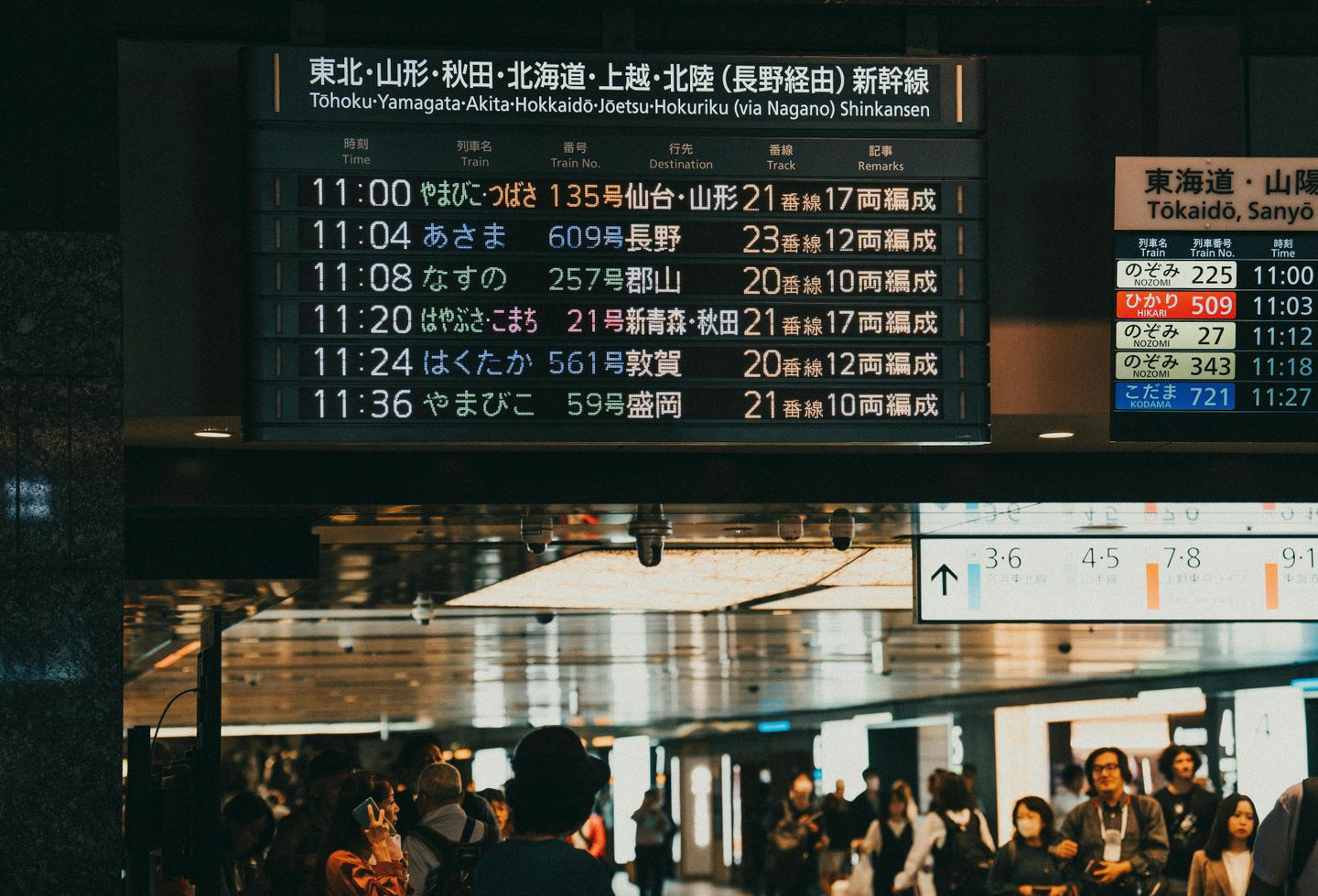
A departures board at a Japanese train station

Activities: "Passive verbs: How to form and use them in Japanese?"

By: Mayumi Ito
Associated Articles

These activities are part of our Japanese Grammar series. The skills we are practicing here are covered in our article:

Activity 1: Forming direct passives

Part 1: Passive form

We’ll start with the passive form. Can you turn the following verbs into the passive form?

  • u-verbs
    ru-verbs
    irregular verbs
    叱る[shikaru](to scold)

    追いかける[oikakeru](to chase)

    無視する[mushi suru](to ignore)

    起こす[okosu](to wake (someone) up)

    話しかける[hanashikakeru](to talk to)

    連れて来る[tsurete kuru](to bring (someone))

Part 2: Active to passive

Let’s practice converting following active sentences to direct passive sentences!

  • Active sentence
    Direct passive sentence

    父が私を叱った。
    Chichi ga watashi o shikatta.
    My father scolded me.

    私は
    Watashi wa ___.
    I was scolded by my father.

    犬がリスを追いかけた。
    Inu ga risu o oikaketa.
    A dog chased a squirrel.

    リスは
    Risu wa ___.
    The squirrel was chased by the dog.

    ジョンが洋子に話しかけた。
    Jon ga Yōko ni hanashikaketa.
    John talked to Yoko.

    洋子は
    Yōko wa ___.
    Yoko was talked to by John.

    みゆきが宏を無視した。
    Miyuki ga Hiroshi o mushi shita.
    Miyuki ignored Hiroshi.

    宏は
    Hiroshi wa ___.
    Hiroshi was ignored by Miyuki.

    さつきがメイを連れて来た。
    Satsuki ga Mei o tsurete kita.
    Satsuki brought Mei with her.

    メイは
    Mei wa ___.
    Mei was brought by Satsuki.

    姉が僕を7時に起こした。
    Ane ga boku o shichi ji ni okoshita.
    My elder sister woke me up at 7:00.

    僕は
    Boku wa ___.
    I was woken up by my elder sister at 7:00.

Activity 2: Particles

As you recall, we need to mark the doer of action with a particle in direct passive sentences. Fill each blank by choosing the appropriate particle from the word bank. You can use the same particle more than once, and not all will be used.

  • [ni]
    [ga]
    から[kara]
    によって[ni yotte]
    [o]
  • 『ハムレット』はシェークスピア書かれた。
    “Hamuretto” wa Shēkusupia ___ kakareta.
    "Hamlet" was written by Shakespeare.

  • 猫がねずみかみつかれた。
    Neko ga nezumi ___ kamitsukareta.
    A cat was bitten by a mouse.

    窮鼠猫噛む[kyūso neko kamu](a cornered mouse will bite a cat) is a Japanese proverb!
  • 美しい花束が花嫁両親に贈られた。
    Utsukushii hanataba ga hanayome ___ ryōshin ni okurareta.
    A beautiful bouquet was presented by the bride to her parents.

    The bouquet presentation by a bridal couple to their parents is one of the featured programs in typical modern weddings in Japan.
  • 東大寺は聖武天皇建てられた。
    Tōdaiji wa Shōmu ten’nō ___ taterareta.
    Todaiji Temple was built by Emperor Shomu.

    Todaiji is a well-known Buddhist temple built in the mid-8th century in Nara Prefecture. It’s famous for the statue of the Great Buddha.

Activity 3: Indirect passive

Now let’s move onto the indirect passive. For each active sentence, complete the indirect passive sentence. Use the clue to understand the situation.

  • Active sentence
    Indirect passive sentence

    生徒が騒いだ。
    Seito ga sawaida.
    Students made a lot of noise.

    Clue: It’s John’s first day as an English teacher in Tokyo.

    ジョンは
    Jon wa ___.
    To John’s annoyance, the students made a lot of noise.

    メアリーが窓際の席にすわった。
    Mearii ga madogiwa no seki ni suwatta.
    Mary sat in the window seat.

    Clue: The speaker also wanted to sit in the window seat to enjoy the scenery.

    (私は)
    (Watashi wa) ___.
    To my annoyance, Mary sat in the window seat.

    • 私は can be omitted, especially in everyday conversations.

    同僚が会社を休んだ。
    Dōryō ga kaisha o yasunda.
    The coworker took the day off.

    Clue: Mika and the coworker were supposed to tidy up the office storage today.

    美香は
    Mika wa ___.
    To Mika’s annoyance, her coworker took the day off.

    中年の男性が最後のコンビニ弁当を買った。
    Chūnen no dansei ga saigo no konbini bentō o katta.
    A middle-aged man bought the last lunch box available at the convenience store.

    Clue: Jack also wanted to buy it, but he was a second too late.

    ジャックは
    Jakku wa ___.
    To Jack’s disappointment, a middle-aged man bought the last lunch box available at the convenience store.

    コンビニ弁当[konbini bentō] is a bento box sold at convenience stores in Japan. There is a large variety, and the price is reasonable.

Activity 4: Possessive passive

The last activity! This time we’ll practice the possessive passive. Read each situation, and fill the blank. To help you, the active sentence is provided as a clue. We've done the first one as an example.
👉 When the subject is “I,” you can omit it!

  • Example

    You are sad because one of your classmates accidentally dropped and broke your smartphone. At home, your mom asks you what’s the matter. Let’s tell her the bad news.

    Active sentence:

    クラスメートが私のスマホを壊した。

    Kurasum ga watashi no sumaho o kowashita.

    A classmate broke my smartphone.

    • Mom:

      どうしたの?
      Dō shita no?
      What’s the matter?

    • You:

      クラスメートにスマホを壊されたんだ
      Kurasumēto ni sumaho o kowasareta nda.
      (To my sorrow,) I had my smartphone broken by my classmate.

  • You are back to your workplace from a parent-teacher conference. During the conference, your daughter’s teachers all praised her. You are happy and proud of her, naturally! Your sympathetic boss asks how it went. Let’s tell her!

    Active sentence:

    先生が私の娘をほめた。

    Sensei ga imōto o ijimeta.

    Her teachers praised my daughter.

    • Your boss:

      どうだった?
      Dō datta?
      How did it go?

    • You:


      (To my delight,) I had my daughter praised by her teachers.

  • You work in an office in Tokyo. You always keep your lunch in the fridge in the break room. Today you find out that someone has eaten your clubhouse sandwich without asking you. All that is left is an empty lunch box. Of course you are upset! A coworker asks you what’s the matter. Tell them what injustice you have suffered!

    Active sentence:

    だれかが私の昼ごはんを食べた。

    Dareka ga watashi no hirugohan o tabeta.

    Someone ate my lunch.

    • Your coworker:

      どうしたの?
      Dō shita no?
      What’s the matter?

    • You:


      (To my annoyance,) I had my lunch eaten by someone.

  • You use the subway to get to the university where you are studying Japanese. It’s a hot summer morning, and you are wearing flip-flops. Unfortunately in the packed subway car, a woman wearing platform shoes steps on your foot. MAJOR OUCH! At the campus, your friend sees you limping and wants to know why.

    Active sentence:

    地下鉄のなかで女の人が私の足を踏んだ。

    Chikatetsu no naka de on’na no hito ga watashi no ashi o funda.

    A woman stepped on my foot in the subway car.

    • Your friend:

      どうしたの?
      Dō shita no?
      What’s the matter?

    • You:


      (To my chagrin,) I got my foot stepped on by a woman in the subway car.

To embark on your next language adventure, join Mango on social!

Ready to take the next step?

The Mango Languages learning platform is designed to get you speaking like a local quickly and easily.

Mango app open on multiple devices