Activities: "How to turn Japanese adjectives into nouns and adverbs?"
Activity 1: Changing Adjective Forms
Let’s practice on the additional functions of Japanese adjectives! Use an adjective given in the Word Bank to complete sentences, changing the form based on the context. You can use each adjective only once.
Word Bank | |
|---|---|
高い[takai](high, tall) | きれい[kirei](beautiful, clean) |
痛い[itai](painful) | 快適[kaiteki](comfortable) |
静か[shizuka](quiet) | 速い[hayai](fast, quick) |
青い[aoi](blue) | いい[ii](good, nice) |
電車に乗り遅れるよ。もう少し歩こう。
Densha ni noriokureru yo. Mō sukoshi ___ arukō.
We’re going to miss the train. Let’s walk a little more quickly.信号がになりましたよ。急いで渡りましょう。
Shingō ga ___ ni narimashita yo. Isoide watarimashō.
The traffic light has turned to blue. Now let’s cross the street.車が汚れていたので、洗いました。
Kuruma ga yogorete ita node, ___ araimashita.
I’ve washed the car clean because it was dirty.(lit. ...washed it cleanly)全問正解ですね。できました!
Zenmon seikai desu ne. ___ dekimashita!
All your answers are correct. Well done!奥歯ののせいで、ゆうべは眠れませんでした。
Okuba no ___ no sei de, yūbe wa nemuremasen deshita.
I couldn’t sleep last night due to the pain in my molar.美術館の中では話してください。
Bijutsukan no naka de wa ___ hanashite kudasai.
Please talk quietly in the art museum.やっぱりファーストクラスはが全然違うなあ。
Yappari fāsuto kurasu wa ___ ga zenzen chigau nā.
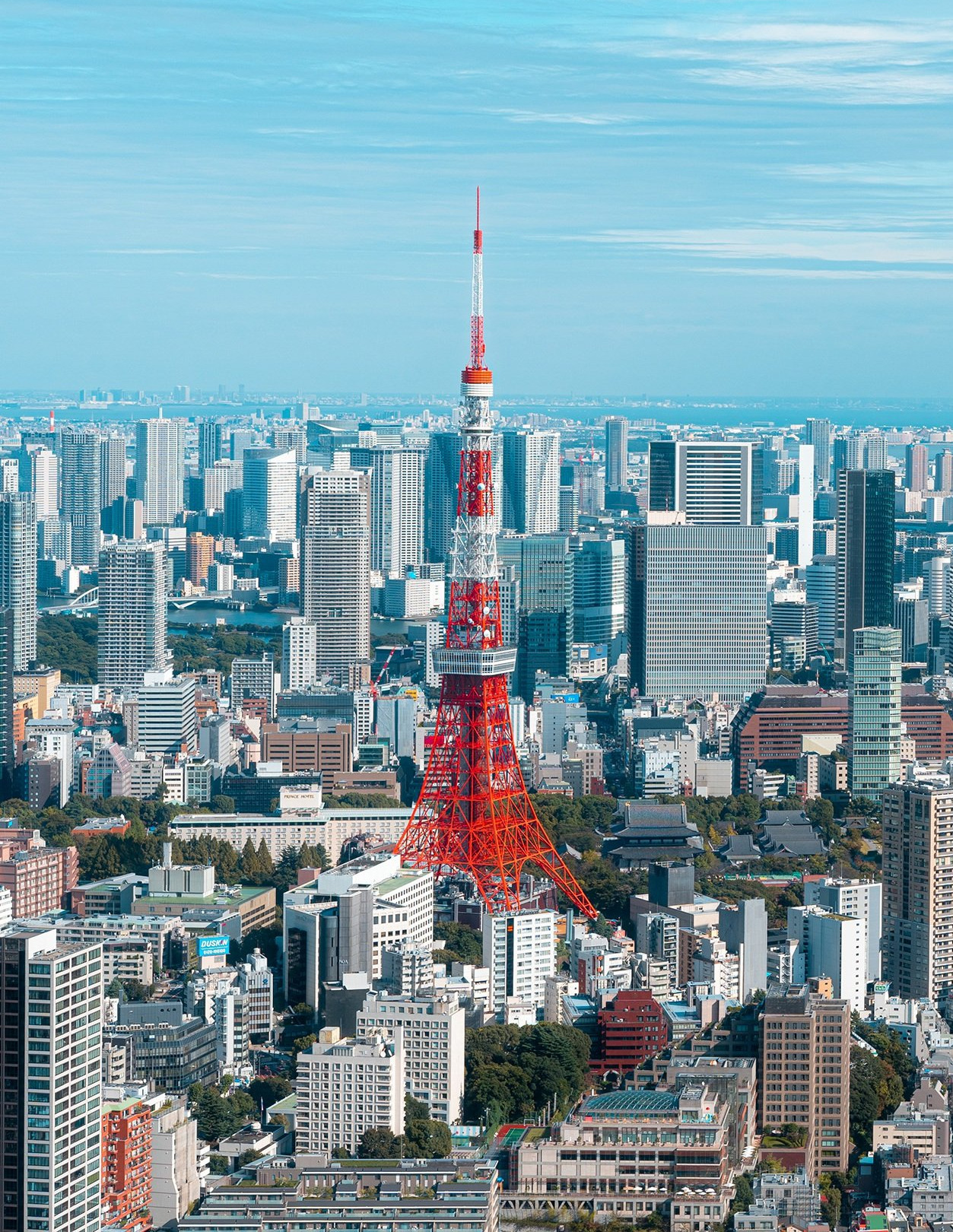
As I expected, a first-class seat offers us comfort that is completely different, doesn’t it!東京タワー*のは333メートルです。
Tōkyō tawā no ___ wa sanbyaku sanjū san mētoru desu.
The height of Tokyo Tower is three hundred thirty three meters.
Activity 2: Color Expressions
Now let’s practice color expressions! Finish each sentence by choosing the most appropriate word.
日本の子供たちは太陽を塗ります。
Nihon no kodomotachi wa taiyō o ___ nurimasu.
Japanese children paint the sun red.アンは屋根の家に住んでいます。
An wa ___ yane no ie ni sunde imasu.
Anne lives in a house with green roofs.母の好きな色はです。
Haha no sukina iro wa ___ desu.
My mother’s favorite color is purple.すみません、あの帽子を見せてください。
Sumimasen, ano ___ bōshi o misete kudasai.
Excuse me, show me that brown hat over there, please.たんぽぽがたくさん咲いているので、野原が見える。
Tanpopo ga takusan saiteiru node, nohara ga ___ mieru.
The field looks yellow because there are a lot of dandelions in bloom.