Activities: "How to say “to be” in Japanese?"
Activity 1: Describe the picture
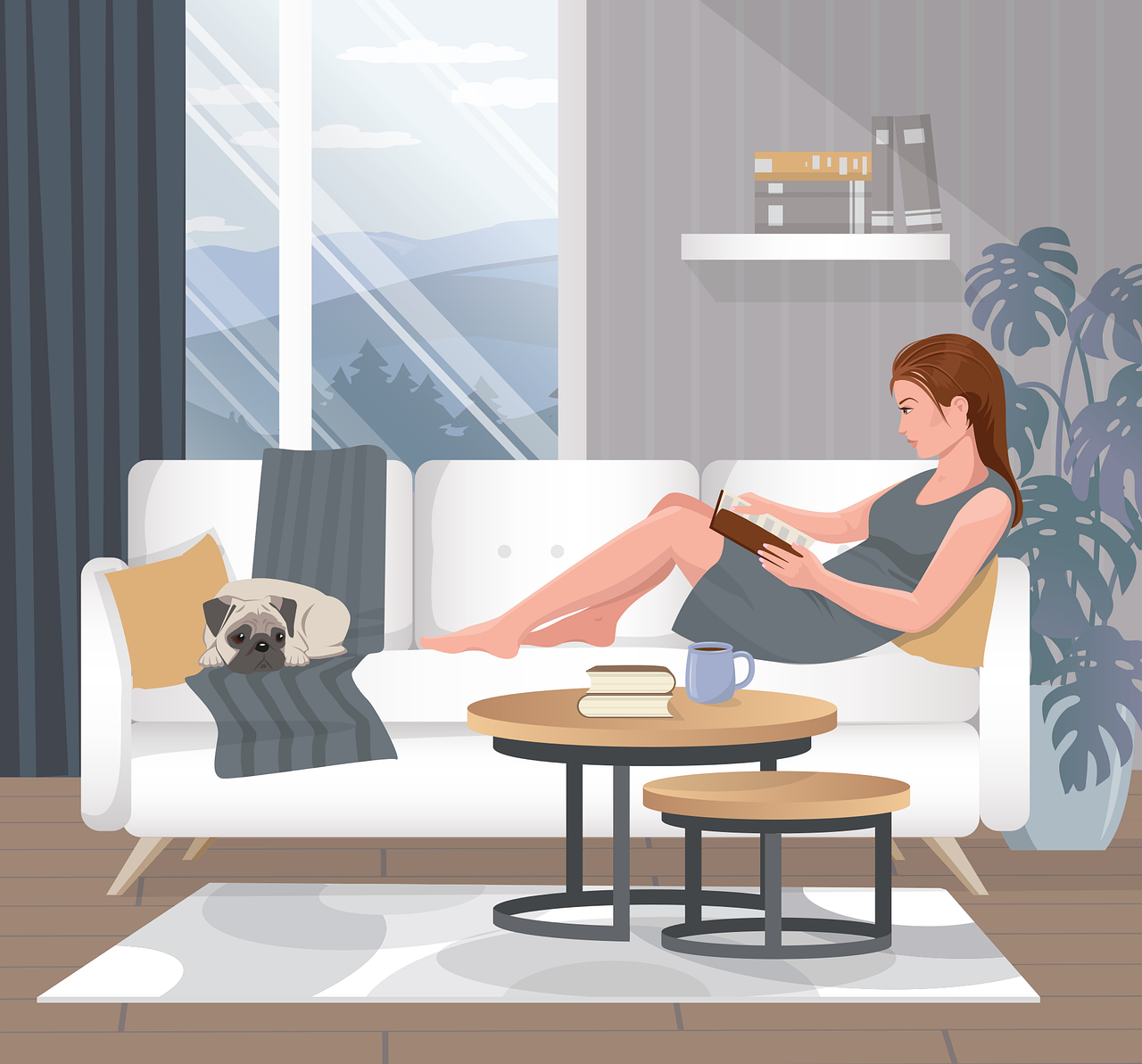
Japanese | Transcription | English |
|---|---|---|
部屋 | heya | room |
時計 | tokei | clock |
女の人 | onnanohito | woman |
猫 | neko | cat |
観葉植物 | kanyōshokubutsu | house plant |
本 | hon | book |
Japanese | Transcription | English |
|---|---|---|
テーブル | tēburu | table |
犬 | inu | dog |
ソファ | sofa | sofa |
上 | ue | top/above |
下 | shita | under/below |
マグカップ | magukappu | mug cup |
Based on the picture, complete the sentences using either います or あります. Remember, you may need to conjugate the verb!
この部屋には時計が。
Kono heya ni wa tokei ga ___.
There isn’t a clock in this room.この部屋には女の人が。
Kono heya ni wa onnanohito ga ___.
There is a woman in this room.猫が。
Neko ga ___.
There isn’t a cat (here).観葉植物が。
Kanyōshokubutsu ga ___.
There is a houseplant (here).本はテーブルの下に。
Hon wa tēburu no shita ni ___.
The books are not under the table.犬はソファの上に。
Inu wa sofa no ue ni ___.
The dog is on the sofa.マグカップはテーブルの上に。
Magukappu wa tēburu no ue ni ___.
The mug cup is on the table.
Bonus Practice!! Rewrite the last three sentences using noun + です.
5.
本はテーブルの下に [...] 。
The books are not under the table.→ 。
6.
犬はソファの上に [...] 。
The dog is on the sofa.→ 。
7.
マグカップはテーブルの上に [...] 。
The mug cup is on the table.→ 。
Activity 2: Are the sentences correct?
Are the following sentences appropriately using いる and ある? If you think the sentence is correct, place O and if you think the sentence is incorrect, place X after each sentence. The verbs are conjugated so don’t get thrown off by that!
カバンの中に財布がなかった。
Kaban no naka ni saifu ga nakatta.
There was no wallet in the bag.うちの庭にはたくさんの花がいる。
Uchi no niwa ni wa takusan no hana ga iru.
There are many flowers in my house’s garden.冷蔵庫に魚がいるから、今日の夜は魚を焼こう!
Reizōko ni sakana ga iru kara, kyō no yoru wa sakana o yakō!
There are fish in the fridge so let’s bake fish for tonight!ごめん、その日はもう予定があるから、遊びに行けない。
Gomen, sono hi wa mō yotei ga aru kara asobi ni ikenai.
I’m sorry, but I already have a plan on that day so I can’t go out.あ、バスがあるよ!走れば間に合うよ。急ごう!
A, basu ga aru yo! Hashireba ma ni au yo. Isogō!
Ah, there’s a bus! We can make it if we run. Let’s hurry!公園には子供がいなかった。
Kōen ni wa kodomo ga inakatta.
There was no child at the park.あの人にはすばらしい絵の才能がある。
Ano hito ni wa subarashii e no sainō ga aru.
That person has a wonderful talent for painting.私の姉はユーモアがいる。
Watashi no ane wa yūmoa ga iru.
My older sister has a sense of humor.
Activity 3:
Read the following conversations and fill in the blanks using いる and ある. Make sure to conjugate them appropriately.
Context 1: 田中(Tanaka) and キム(Kimu) are coworkers. They are talking about scheduling a meeting.
田中 :
水曜日の午後2時から、空いていますか。
Suiyōbi no gogo ni-ji kara, aite imasu ka.
Are you available from 2PM on Wednesday?キム :
あ〜、すみません。その時間は会議がんです。
A-, sumimasen. Sono jikan wa kaigi ga ___ n desu.
Oh, I’m sorry. (At) that time, I have a meeting.午後4時からは何もんですけど、田中さんはどうですか。
Gogo yo-ji kara wa nani mo ___ n desu kedo, Tanaka-san wa dō desu ka.
I don’t have anything from 4PM, how about you, Mr. Tanaka?田中 :
午後4時からですか。大丈夫です。じゃあ、そうしましょう。
Gogo yo-ji kara des ka. Daijyōbu desu. Jā, sōshimashō.
From 4PM? That’s fine. Well then, let’s do so.
Context 2: 健(Takeru) and 湊(Minato) are friends and live in a college dorm. It’s 1 PM and 健 knocks on 湊’s door.
健 :
湊、?
Minato, ___ ?
Minato, are you there?湊 :
あ、よ。どうした?
A, ___ yo. Dō shita?
Yeah, I’m here. What’s up?健 :
いや、一緒にゲームしないかと思って。どうしたの?ジャケット着て。
Iya, issho ni gēmu shinai ka to omotte. Dō shita no? Jaketto kite.
Well, I thought we'd play games together. What’s going on? You’re wearing a jacket.湊 :
実は、午前中にアルバイトの面接がんだ。それで、今帰ってきたところ。
Jitsu wa, gozenchū ni arubaito no mensetsu ga ___ n da. Sore de, ima kaette kita tokoro.
Well, I had an interview for a part-time job this morning. And I just got back.健 :
そっか。面接はどこで?
Sokka. Mensetsu wa doko de?
I see. Where did you do the interview?湊 :
駅前にデパートがだろ?そこの6階にラーメン屋で。
Ekimae ni depāto ga ___ ? Soko no rokkai ni ___ rāmenya de.
You know that there is a department store in front of the station? At the ramen shop on the 6th floor there.健 :
へ〜、そっか。お疲れ!
He-, sokka. Otsukare!
I see. Where did you do the interview?